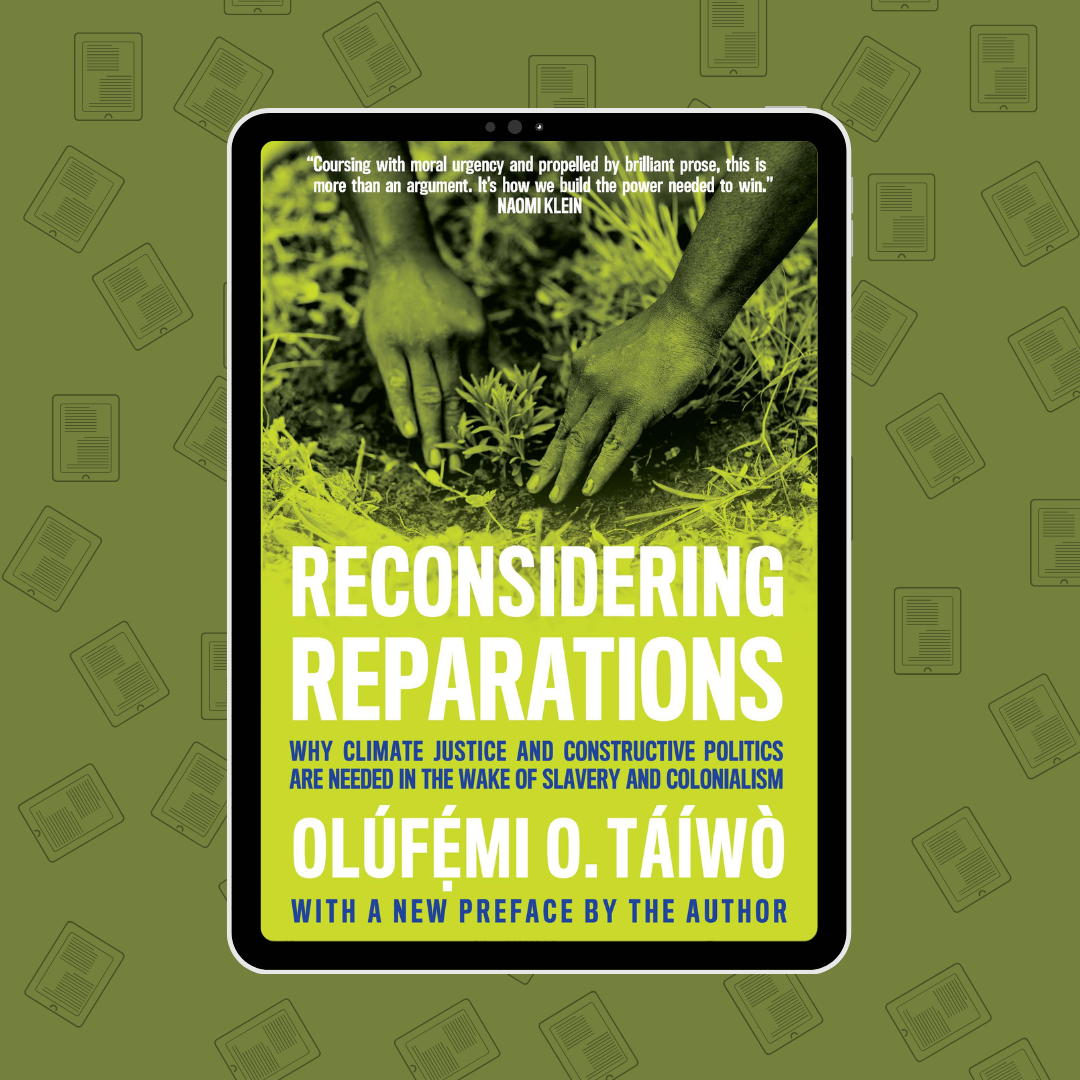
Review: REconsidering Reparations
Olúfẹ́mi O. Táíwò's Reconsidering Reparations is not an easy read, and it doesn't intend to be. Dense with philosophical argument and political theory, it demands genuine intellectual engagement from its audience. That effort is richly rewarded, because Táíwò has written something genuinely transformative—a book that reframes both reparations and climate justice in ways that make each conversation richer and more honest.
Táíwò's central argument is deceptively elegant: reparations should be understood not primarily as backward-looking compensation for historical wrongs, but as a forward-looking project of world-building. This reframing has profound implications for climate discourse. The communities most devastated by colonialism and slavery are, not coincidentally, the communities most exposed to climate catastrophe today. Táíwò connects these threads with rigorous care, demonstrating that the racial geography of climate vulnerability isn't accidental—it's the predictable inheritance of extractive systems that were always designed to concentrate harm among the least powerful.
What distinguishes this book from other climate justice texts is its constructive rather than merely critical orientation. Táíwò introduces the concept of "constructive politics," urging movements to focus on building new structures rather than only resisting existing ones. For climate activists, this is genuinely clarifying. It shifts the question from "who is responsible?" to "what kind of world are we building, and for whom?"
His treatment of the Global South's disproportionate climate burden is particularly valuable. He articulates clearly why wealthy nations' carbon debts and colonial histories are inseparable from any honest accounting of climate responsibility—something mainstream climate policy consistently struggles to acknowledge. Reading Táíwò, you begin to understand why climate negotiations so frequently stall: they're attempting technical solutions to problems that are fundamentally about justice and power.
The academic density that makes this book challenging is also what gives it authority. Táíwò doesn't simplify to comfort his readers, and that intellectual honesty makes his conclusions more persuasive rather than less. For climate advocates seeking a philosophical foundation for intersectional climate justice work, this book provides exactly that.