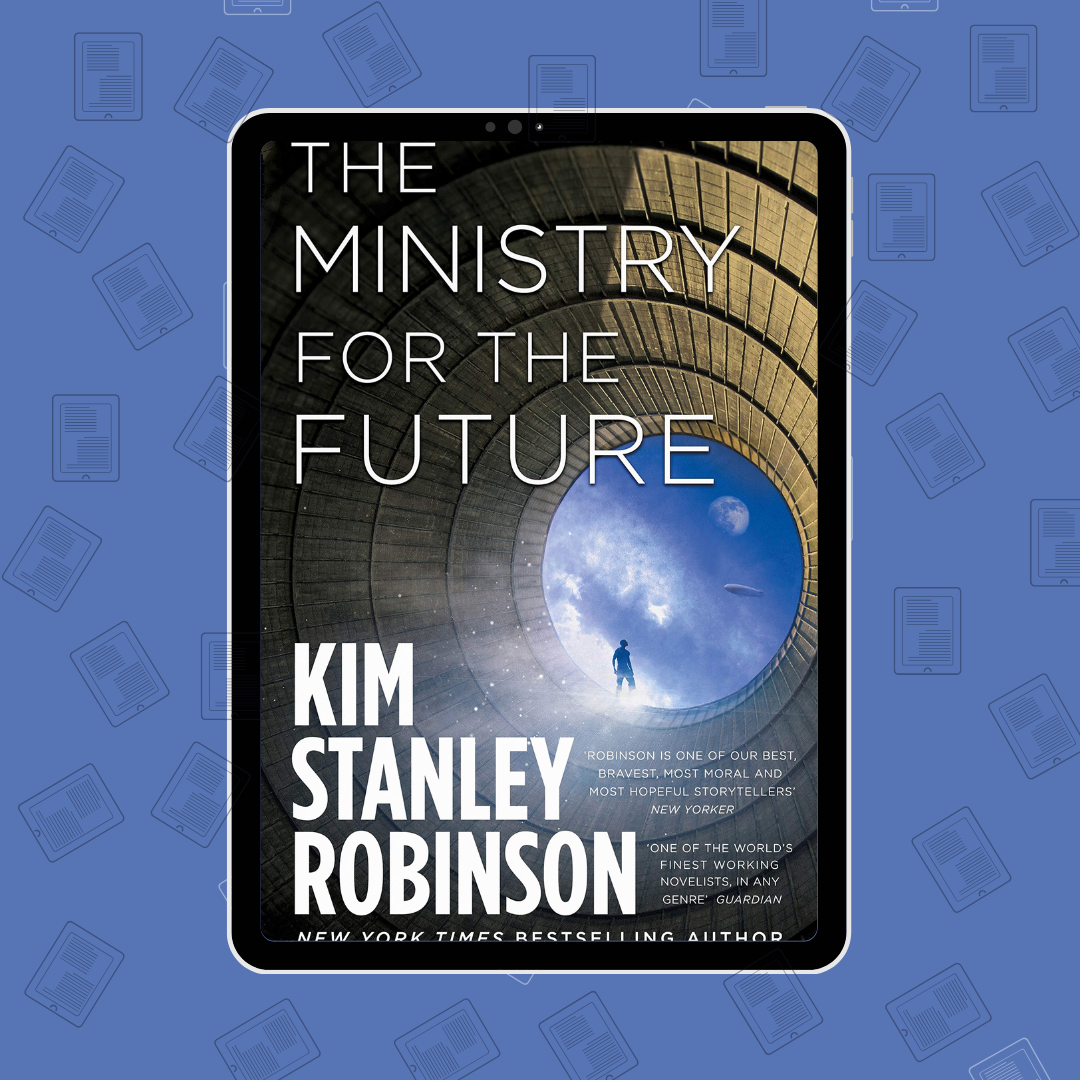
Review: ministry for the Future
Kim Stanley Robinson's Ministry for the Future is one of the most important climate novels written in the last decade. Published in 2020, it opens with one of the most viscerally confronting scenes in contemporary fiction—a catastrophic heat wave in India that kills millions—and uses that tragedy as its moral foundation for everything that follows. That opening scene will stay with me for the rest of my life. Harrowing. It's a book that earns its optimism rather than simply declaring it.
The novel follows Mary Murphy, head of a newly created UN agency tasked with representing the interests of future generations and all living creatures. What unfolds is less a conventional narrative and more a sprawling, ambitious interrogation of how human civilization might actually navigate the climate crisis. Not through individual heroism or technological miracles, but through the grinding, unglamorous work of institutional change, economic restructuring, and political will.
Robinson's real achievement here is making policy interesting. Carbon coin schemes, central banking reform, and carbon capture initiatives become genuinely compelling plot elements because he grounds them in human consequence. You understand why these mechanisms matter because you've already watched what happens when they don't exist.
The book's structure is deliberately unconventional, mixing traditional narrative chapters with documentary-style interludes, statistics, and philosophical reflections. Some readers find this jarring, but for climate-conscious readers it feels honest. The climate crisis isn't a clean story with a single protagonist, and Robinson refuses to pretend otherwise.
Where the book truly distinguishes itself from other climate fiction is its insistence that solutions exist and are achievable, while never minimizing the scale of transformation required. It treats readers as adults capable of sitting with both urgency and hope simultaneously, which is a rare and valuable quality in climate literature.
For anyone seeking a book that matches the complexity of the crisis itself, Ministry for the Future is essential reading.